Jamawar Fabric: History, Feel & Why Grooms Still Choose It in 2026
Jamawar fabric has always had a special place in South Asian wedding fashion. It is rich, detailed, and full of tradition. For many grooms, it is more than just fabric. It is a way to look royal without trying too hard.
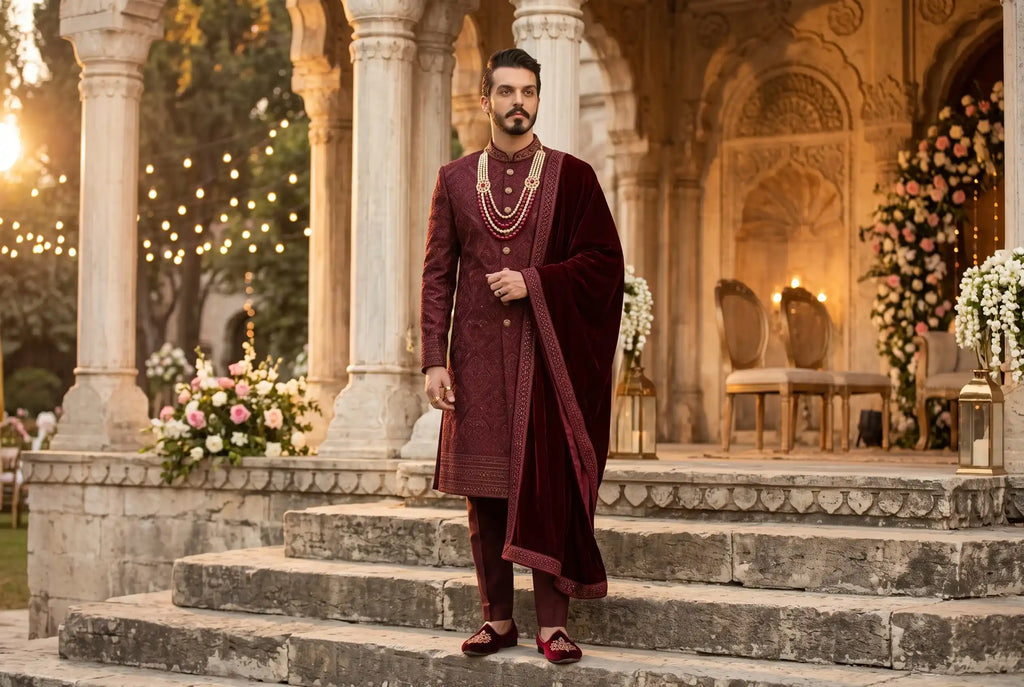
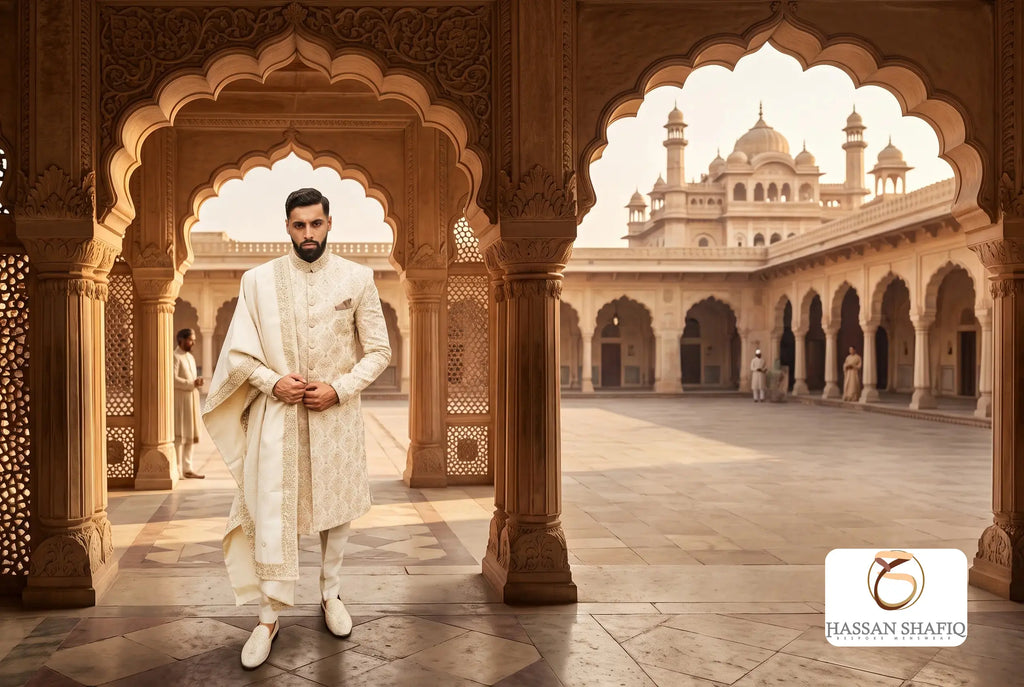
In 2026, Jamawar is still a popular choice for sherwanis and wedding outfits. Grooms like it because it feels special, looks elegant, and carries a strong cultural story. Whether the wedding is in the UK, USA, Canada, or Bradford, Jamawar still fits the moment beautifully.
Article Summary
This article explains:
-
What Jamawar fabric is
-
Where Jamawar fabric comes from
-
How it became linked with royal fashion
-
Why it feels rich and luxurious
-
Why grooms still choose Jamawar sherwanis in 2026
-
How Jamawar compares with velvet and silk
-
How to style a Jamawar sherwani for weddings
In simple words, Jamawar is a traditional fabric with a royal look. It is still loved by modern grooms because it gives a wedding outfit depth, culture, and style.
What Is Jamawar Fabric?
Jamawar fabric is a luxury woven fabric known for its detailed patterns. These patterns are not just printed on top. In many pieces, the design is woven into the fabric itself.
This gives Jamawar a rich and textured look. It often includes:
-
Floral patterns
-
Paisley designs
-
Traditional motifs
-
Woven details
-
A soft shine
-
A premium finish
Jamawar is used in sherwanis, shawls, waistcoats, jackets, and formal outfits. It is mostly chosen for special events because it looks premium and traditional at the same time.
For grooms, this fabric works well because it adds detail without making the outfit look too heavy.
The History of Jamawar Fabric
The history of Jamawar fabric is closely linked with Kashmir. Kashmir was famous for fine weaving and beautiful shawls. Skilled workers used handlooms to create detailed designs that took a lot of time and patience.
In the past, Jamawar was not everyday clothing. It was worn by rich families, nobles, and people with high status. The fabric was expensive because it needed expert work and quality materials.
How Jamawar Became Popular
-
It was hard to make The patterns needed skill and time.
-
It looked royal The fabric had rich designs and a premium feel.
-
It was linked with status People wore it to show class, taste, and tradition.
During the Mughal era, Jamawar became even more popular. Mughal rulers loved fine fabrics and detailed designs. Their support helped Jamawar become a symbol of royal style.
Over time, Jamawar moved from royal courts to wedding wardrobes. Today, it is still loved because it keeps that old charm alive.
How Jamawar Fabric Is Made
Traditional Jamawar was made by skilled weavers on looms. The design was created during the weaving process. This made the fabric more special because the pattern became part of the cloth.
Some old Jamawar pieces took months to complete. The more detailed the design, the longer it took. This is one reason why Jamawar became known as a luxury fabric.
Key Parts of Good Jamawar Craftsmanship
-
Clean woven patterns
-
Smooth finishing
-
Balanced shine
-
Strong fabric structure
-
Neat design placement
-
A rich feel in hand
Modern Jamawar is now made in different ways. Some pieces are handwoven, while others are made with machines. Even today, good Jamawar is judged by its pattern, texture, finish, and overall feel.
A quality piece should not look flat. It should have depth, clean design, and a smooth finish.
What Makes Jamawar Fabric Feel So Luxurious?
Jamawar feels rich because of its woven patterns and texture. It has a heavier feel than many simple fabrics. This makes it perfect for wedding outfits like sherwanis.
The fabric can feel:
-
Smooth
-
Firm
-
Structured
-
Rich
-
Detailed
-
Comfortable when tailored well
This structure helps a sherwani hold its shape. That is important for grooms because the outfit needs to look sharp in photos and in person.
Jamawar also has a natural shine in many designs. It does not always need stones or heavy embroidery to look grand. The woven design already gives it a royal look.
This is why many grooms choose Jamawar when they want something elegant but not too loud.

Why Grooms Still Choose Jamawar Fabric in 2026
Grooms still choose Jamawar because it gives a complete wedding look. It feels traditional, but it also works well with modern tailoring.
A Jamawar sherwani can look classic, clean, and stylish at the same time. It suits South Asian weddings where the groom needs to stand out without looking overdone.
Main Reasons Grooms Choose Jamawar
-
It looks royal Jamawar has a rich look that suits wedding events.
-
It carries tradition The fabric connects with South Asian culture and heritage.
-
It photographs well The woven patterns look beautiful under wedding lights.
-
It works with modern cuts Jamawar looks good in both classic and modern sherwani styles.
-
It feels special It gives the groom an outfit that feels meaningful.
For weddings in the UK, USA, Canada, and Bradford, Jamawar is also a strong choice because it works well for both traditional and modern events.
Jamawar vs Velvet vs Silk
Jamawar, velvet, and silk are all popular wedding fabrics. Each one has its own style.
|
Fabric |
Best For |
Feel |
Look |
Good For |
|
Jamawar |
Grooms who want tradition and detail |
Firm and rich |
Royal and patterned |
Sherwanis, waistcoats, shawls |
|
Velvet |
Grooms who want a bold winter look |
Soft and heavy |
Deep and luxurious |
Winter weddings, evening events |
|
Silk |
Grooms who want a light clean look |
Smooth and soft |
Elegant and simple |
Summer weddings, refined outfits |
Jamawar is best for grooms who want pattern, structure, and a royal look. It works well for sherwanis because the woven design adds detail without needing too much extra work.
Velvet feels soft and heavy. It is great for winter weddings and evening events. It gives a bold and rich look, but it can feel warmer than Jamawar.
Silk is smooth and light. It has a soft shine and feels elegant. It is a good choice for simple and refined outfits.
If a groom wants heritage and detail, Jamawar is a great option. If he wants a bold winter look, velvet works well. If he wants something light and sleek, silk is a good choice.
Best Wedding Events to Wear a Jamawar Sherwani
A Jamawar sherwani can work for many wedding events. It depends on the color, design, and styling.
1. Nikah
For a Nikah, lighter shades work beautifully. These colors keep the outfit graceful and clean.
Good color choices include:
-
Ivory
-
Cream
-
Beige
-
Soft gold
-
Off-white
2. Baraat
For a Baraat, richer colors can create a strong groom look. This is the event where many grooms want to look more royal.
Good color choices include:
-
Maroon
-
Gold
-
Navy
-
Black
-
Deep green
3. Reception
For a reception, a Jamawar sherwani with a modern cut can work very well. It gives a formal look while still keeping the traditional feel.
4. Engagement or Family Events
Jamawar can also be worn for engagements and family wedding events. A Jamawar waistcoat or jacket can be a good choice for a lighter outfit.
How to Identify High-Quality Jamawar Fabric
Good Jamawar fabric should look neat and well-finished. The pattern should be clear. The design should not look blurry or uneven.
Before choosing a Jamawar sherwani, check these points:
-
Pattern quality The design should look clean and sharp.
-
Fabric weight It should feel firm but not too stiff.
-
Shine The shine should look balanced and rich.
-
Finishing The fabric should not have loose threads or rough edges.
-
Tailoring The sherwani should fit well around the shoulders, chest, and sleeves.
The stitching also matters. Even the best fabric can look poor if the tailoring is not right. A well-made Jamawar sherwani should feel comfortable and look sharp.
How to Style a Jamawar Sherwani
A Jamawar sherwani already has strong detail. So it is better to keep the styling clean.
Simple Styling Tips
-
Pair it with straight trousers or churidar pants
-
Choose footwear that matches the outfit style
-
Add a shawl only if it balances the sherwani
-
Keep accessories limited
-
Avoid too many heavy pieces together
-
Choose colors that suit the event
Traditional khussa shoes work well with Jamawar. For a modern look, formal loafers can also work depending on the outfit.
A shawl can add more elegance, especially for winter weddings. But it should not fight with the sherwani design. If the sherwani is heavily patterned, choose a simpler shawl.
Accessories should be limited. A brooch, watch, or turban can complete the look. Too many extras can make the outfit feel busy.
Frequently Asked Questions
Q1.What is Jamawar fabric made of?
Jamawar can be made from silk, wool, cotton, or blended materials. The exact feel depends on the fabric quality and how it is woven.
Q2.s Jamawar good for sherwanis?
Yes, Jamawar is a great choice for sherwanis. It has structure, detail, and a rich look. This makes it ideal for groom wear.
Q3.Is Jamawar suitable for weddings?
Yes, Jamawar is perfect for weddings. It gives a traditional and royal look without needing too much extra decoration.
Q4.Is Jamawar better than velvet?
It depends on the look you want. Jamawar is better for detailed woven patterns and heritage style. Velvet is better for a soft, bold, and winter look.
Q5.Can Jamawar be worn in 2026?
Yes, Jamawar is still very popular in 2026. Modern grooms choose it because it mixes tradition with clean modern tailoring.
Conclusion
Jamawar fabric has a long history, but it still feels fresh for today’s groom. It carries the beauty of old weaving traditions and the elegance needed for modern weddings.
For grooms who want a sherwani that feels royal, meaningful, and stylish, Jamawar is still one of the best choices. It works well for South Asian weddings in Bradford, the UK, the USA, and Canada.
That is why Jamawar is not just a fabric. It is a wedding statement that continues to stand the test of time.
Related post
27
Aug