
Why Moroccan Patterns Are Trending in Men’s Wedding Wear
Moroccan patterns in men’s wedding wear have become one of the most exciting trends in modern groom fashion. These designs blend culture, craftsmanship, and elegance in a way few styles can match. Their rich history gives every outfit a story that connects the groom to tradition and style. As more men look for unique and meaningful wedding outfits, Moroccan-inspired garments are gaining global attention. This trend continues to grow, especially among grooms who want a royal, cultural, and stylish look.
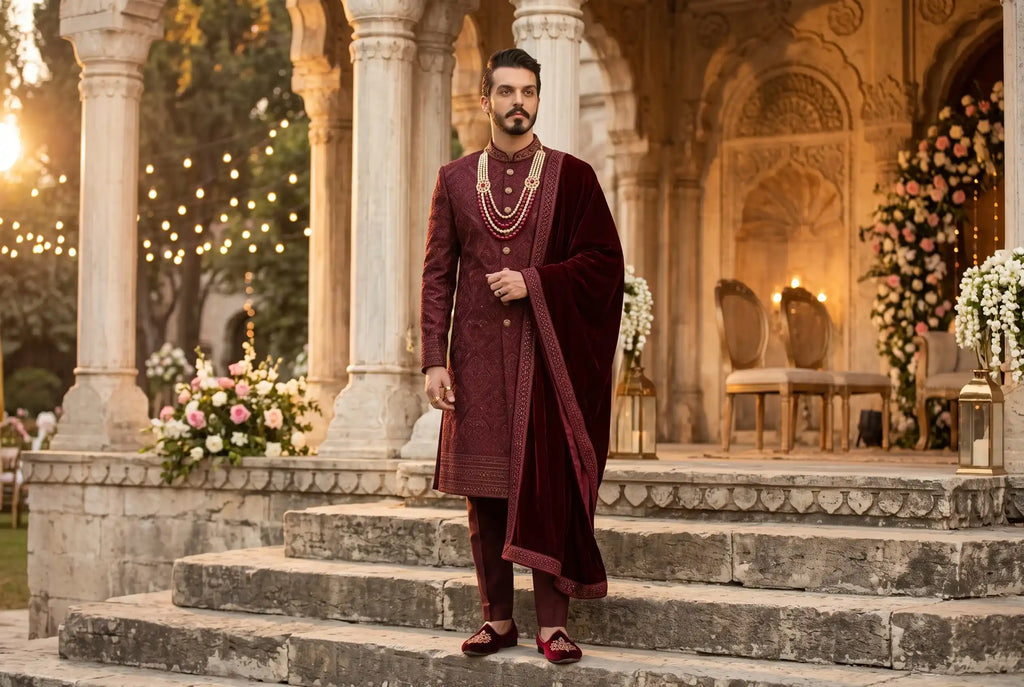
Today’s fashion world values authenticity, and Moroccan patterns offer exactly that. The detailed embroidery, geometric motifs, and handmade craftsmanship make each garment feel special. These elements enhance groom outfits and make them stand out in wedding photography. Designers across the world are now reinventing these traditional motifs with modern cuts and premium fabrics. Brands like Hassan Shafiq Menswear are leading this evolution with elegant Moroccan-inspired collections.
Moroccan Attire for Men: Traditional Garments & Styling Guide

Moroccan attire reflects centuries of tradition, artistry, and cultural pride. Each garment carries a story shaped by different cities, tribes, and artisans across Morocco. Men’s Moroccan clothing is elegant yet practical, making it ideal for weddings and formal events. Grooms today love these outfits because they blend tradition with modern luxury. This is why Moroccan patterns in men’s wedding wear continue to rise in popularity.
Styling Moroccan attire is simple yet impactful. Adding a belt, embroidered shawl, or handcrafted footwear can instantly elevate the look. Men can choose between casual and royal designs depending on their event. These outfits pair well with modern accessories like cufflinks and tailored trousers. Hassan Shafiq Menswear offers curated Moroccan-inspired pieces perfect for Nikkah, receptions, and themed weddings.
History & Cultural Meaning
Moroccan clothing dates back hundreds of years, shaped by Berber, Arab, Andalusian, and African influences. Every region brings its own colors, fabrics, and patterns that create a rich visual identity. These garments are worn with pride during celebrations, religious gatherings, and weddings. Many designs symbolize purity, royalty, and spiritual protection for the wearer. This cultural depth makes Moroccan patterns in men’s wedding wear meaningful for modern grooms.
Over time, these garments have evolved while maintaining their cultural roots. Traditional silhouettes blend smoothly with modern tailoring to create stylish wedding outfits. Embroideries such as “sfifa” and “mqash” represent Morocco’s artisanal heritage. The symbolism behind colors like gold, white, and blue adds deeper significance. Wearing Moroccan attire today connects men to a long tradition of elegance and pride.
Key Moroccan Garments for Men

Below is a quick look at the most popular Moroccan garments worn for weddings and special events:
Djellaba
The djellaba is one of the most iconic garments in Moroccan fashion. It features a long robe, pointed hood, and detailed handwork around the chest area. The garment was originally designed for comfort and protection from the weather. Today, it has become a statement piece for cultural weddings and formal occasions. Many modern grooms choose djellabas with subtle Moroccan patterns in men’s wedding wear to enhance their wedding look.
Contemporary djellabas are crafted with premium fabrics such as wool blends, cotton, or lightweight linen. Designers now add metallic threads, contrasting trims, and minimal embroidery. This brings a balance of tradition and luxury. The djellaba pairs well with sandals or soft leather shoes for an authentic Moroccan vibe. Hassan Shafiq Menswear offers modernized djellabas ideal for grooms seeking a regal presence.
Gandora
The gandora is simple, breathable, and perfect for warm-weather events. It is usually sleeveless and features subtle stitching or hand-made detailing. Many men wear the gandora for pre-wedding functions like Mehndi or family gatherings. The relaxed cut makes it comfortable while still looking elegant. This versatility makes it an important part of Moroccan patterns in men’s wedding wear.
Modern gandoras now come in premium fabrics, tailored fits, and elegant trims. Designers also add gold or silver threadwork for festive occasions. Some styles include side slits for enhanced movement. The gandora is perfect for grooms who want a refined but easy-going outfit. It complements sandals, soft slippers, or embroidered footwear.
Jabador
The jabador is a two-piece or three-piece set often worn for weddings and celebrations. It includes a long embroidered tunic paired with matching trousers. The elegance of the jabador comes from its handmade embroidery known as “sfifa” and “aqd.” These details highlight Moroccan patterns in men’s wedding wear beautifully. Many grooms choose jabador sets for Nikkah ceremonies or indoor weddings.
Today’s jabador designs blend modern tailoring with traditional handwork. Some sets include a matching vest or lightweight overcoat. Soft pastel shades, white tones, and gold embroidery remain the most popular choices. The jabador pairs perfectly with leather sandals or loafers. Hassan Shafiq Menswear carries refined jabador sets designed for stylish, modern grooms.
Caftan / Kaftan
The Moroccan men’s caftan is long, structured, and royal-looking. It is often worn by grooms who want a king-like presence on their special day. The design includes detailed embroidery, flowing cuts, and premium fabrics. Each piece reflects fine Moroccan craftsmanship passed down through generations. This makes the caftan one of the most admired garments featuring Moroccan patterns in men’s wedding wear.
Modern caftans combine luxury with comfort. Designers now offer lightweight fabrics and streamlined silhouettes. Subtle geometric embroidery adds a modern touch. These garments pair well with formal shoes and elegant accessories. Hassan Shafiq Menswear showcases exclusive caftans designed for graceful and memorable wedding looks.
Comparison of Traditional Moroccan Garments
|
Garment |
Best For |
Features |
Wedding Use |
|
Djellaba |
Cultural weddings |
Hood, long robe, embroidery |
Ceremony / Reception |
|
Gandora |
Warm weather events |
Sleeveless, breathable |
Mehndi / Casual Functions |
|
Jabador |
Festive weddings |
Tunic set with embroidery |
Nikkah / Indoor Weddings |
|
Caftan |
Royal looks |
Long, structured, luxury |
Main Wedding Event |
Moroccan Jabador as a Traditional Wedding Dress
The jabador has become a favorite for modern cultural weddings. Many grooms choose it because it balances tradition with style. Its embroidery highlights Moroccan heritage with delicate precision. The comfortable fit makes it easy to wear during long events. This is why jabador designs dominate Moroccan patterns in men’s wedding wear.
Modern interpretations of the jabador include bolder colors and luxury accents. Designers often pair the jabador with embroidered shawls or matching vests. Gold and white combinations remain the most popular wedding picks. These styles look perfect in wedding photography due to their rich textures. Hassan Shafiq Menswear offers premium jabador sets that bring Moroccan elegance to your wedding wardrobe.
Fabrics & Craftsmanship
Traditional Fabrics
Traditional Moroccan fabrics blend natural fibers with artisanal skill. Wool, cotton, and linen form the base of most garments. These materials are chosen for comfort in Morocco’s varied climate. The textures add richness to Moroccan patterns in men’s wedding wear. Grooms appreciate these fabrics for their breathable and elegant feel.
Modern Moroccan garments now include blends of silk, viscose, and velvet. These materials give the outfits a luxurious touch suitable for formal settings. Velvet and brocade are especially popular in winter weddings. Lightweight linen remains preferred for daytime events. Designers combine these fabrics with detailed embroidery for a refined finish.
Natural Fibers
-
Wool
-
Linen
-
Cotton
-
Organic blends
Specialized Textiles
-
Velvet
-
Brocade
-
Silk blends
-
Metallic-thread fabrics
Artisanal Techniques
Moroccan craftsmanship is famous for its meticulous handwork. Embroidery techniques like “sfifa” and “mqash” require years of training. These techniques create beautiful motifs that define Moroccan patterns in men’s wedding wear. Artisans carefully stitch every detail to maintain the garment’s authenticity. This makes each piece feel unique and valuable.
Modern designers respect these traditions while adding contemporary methods. Some use new tools to enhance stitching precision. Digital pattern guides help maintain consistency without losing authenticity. Traditional handwork remains the highlight of premium garments. Hassan Shafiq Menswear collaborates with skilled artisans to preserve these techniques.
Weaving & Construction
-
Hand-loom weaving
-
Precision cutting
-
Traditional tailoring methods
-
Reinforced seams for durability
Decoration & Embellishment
-
Gold thread embroidery
-
Geometric borders
-
Hand-sewn trims
-
Pearl or bead detailing
Styling Moroccan Attire for Modern Men

Discover Authentic Moroccan Craftsmanship
Moroccan attire stands out because every piece carries the mark of real artisans. This craftsmanship gives the outfits character, depth, and a handmade charm. Grooms love these details because they look elegant and feel meaningful. Moroccan patterns in men’s wedding wear add richness to every wedding look. These pieces blend heritage with modern fashion trends.
Brands like Hassan Shafiq Menswear highlight authentic craftsmanship in each design. Their Moroccan-inspired pieces feature clean cuts and detailed embroidery. The use of premium fabrics enhances comfort and style. These garments allow men to look unique during important celebrations. Wearing them makes a groom feel confident and graceful.
Embroidery & Embellishments
Embroidery plays a key role in Moroccan fashion. Intricate motifs reflect cultural identity and artistic heritage. These embellishments transform simple garments into royal outfits. Metallic threads are often used to create shimmering details. This is why Moroccan patterns in men’s wedding wear stand out in every ceremony.
Modern grooms prefer embroidery that adds character without overpowering the outfit. Soft gold, silver, and white threads blend well with pastel or bold colors. Designers also combine multiple embroidery styles for added texture. These details work perfectly for both daytime and evening weddings. Hassan Shafiq Menswear offers pieces with balanced embellishments for refined wedding styling.
Storage & Care Recommendations
Traditional Moroccan garments require thoughtful care. Proper storage helps preserve the embroidery, fabric texture, and shape. Garments should be kept in cool, dry spaces to prevent moisture damage. It is best to fold embroidered sections with silk tissue for protection. This keeps Moroccan patterns in men’s wedding wear looking new for years.
Dry cleaning is recommended for caftans, jabador sets, and djellabas with heavy embroidery. Lightweight garments like gandoras can be hand-washed gently. Sun-drying should be avoided to prevent color fading. Storing garments in breathable covers maintains their quality. Following these steps ensures long-lasting beauty and elegance.
Traditional Wisdom
-
Use wooden hangers
-
Store in cotton garment bags
-
Keep away from direct sunlight
-
Air the garments once a month
Modern Designers & Contemporary Variations
Modern designers have taken Moroccan fashion to new heights. They have introduced contemporary cuts, lighter fabrics, and updated silhouettes. This makes traditional garments suitable for weddings around the world. Grooms now enjoy designs that blend cultural heritage with modern trends. These innovations support the rise of Moroccan patterns in men’s wedding wear.
Hassan Shafiq Menswear plays a leading role in modernizing Moroccan styles. Their pieces merge traditional embroidery with refined tailoring. They offer designs perfect for Nikkah, receptions, and destination weddings. The collections are elegant, balanced, and wearable. This fusion appeals to men who want a unique and sophisticated wedding look.
Sizing & Fit
Perfect sizing ensures comfort and confidence. Moroccan garments often have relaxed cuts, but modern versions offer tailored fits. These adjustments create a cleaner, sharper silhouette. Men can choose slim-fit jabador sets or structured caftans for wedding events. Accurate measurements help elevate Moroccan patterns in men’s wedding wear.
Hassan Shafiq Menswear provides custom sizing options for a flawless fit. They tailor each garment according to body shape and occasion needs. This ensures both comfort and style. Customized embroidery also adds a personal touch. Clients receive pieces that look refined and fit perfectly.
Ethical Purchasing
Ethical fashion supports artisans, communities, and sustainable manufacturing. Moroccan clothing is deeply connected to handwork and cultural preservation. Purchasing ethically supports skilled craftsmen who keep these traditions alive. It also ensures high-quality materials and fair labor practices. This makes Moroccan patterns in men’s wedding wear meaningful beyond style.
Hassan Shafiq Menswear partners with trusted artisans to maintain ethical production. Their collections reflect responsible sourcing and honest craftsmanship. Customers appreciate knowing their garments are created with care. This approach enhances the value of every piece. It also supports long-term sustainability in fashion.
The Timeless Elegance of Moroccan Men’s Kaftans
History & Significance
The Moroccan men’s kaftan holds a strong place in cultural history. Kings, scholars, and nobles wore it as a symbol of dignity and refinement. Today, it remains a popular choice for weddings due to its royal presence. The design features flowing lines and elegant embroidery. These elements highlight Moroccan patterns in men’s wedding wear beautifully.
Over time, the kaftan has evolved while maintaining its traditional essence. Modern versions include lightweight fabrics and slimmer cuts. Designers also add contemporary embroidery patterns. These elements make the kaftan suitable for both traditional and modern wedding themes. Hassan Shafiq Menswear offers kaftans crafted with luxury and cultural pride.
Key Features
The Moroccan kaftan stands out due to its signature craftsmanship. Luxurious fabrics like velvet, silk, and brocade enhance its royal charm. Detailed embroidery outlines the neckline, sleeves, and borders. These features create visual richness from every angle. This design depth strengthens the appeal of Moroccan patterns in men’s wedding wear.
Modern kaftans include subtle updates for comfort and style. Lightweight fabrics enhance breathability. Tailored cuts create a structured silhouette without losing cultural essence. Contemporary color palettes add freshness to the look. These updates make the kaftan ideal for grooms seeking elegance and heritage.
How to Style Moroccan Men’s Kaftans
Kaftans can be styled for both casual and formal events. Lightweight linen kaftans pair well with sandals for relaxed gatherings. Embroidered versions suit Nikkah ceremonies or evening receptions. A jeweled brooch or statement belt can add elegance. This flexibility supports the popularity of Moroccan patterns in men’s wedding wear.
For formal weddings, grooms can choose velvet or brocade kaftans. Layering with an embroidered shawl elevates the look further. Neutral or pastel colors create a soft and graceful appearance. Black and gold combinations offer a bold, royal aesthetic. Hassan Shafiq Menswear provides kaftans suitable for every style preference.
Related Traditional Attire
Traditional Moroccan attire includes several elegant options. The thobe offers simplicity and comfort for daily wear. The djellaba is perfect for ceremonial events and cultural celebrations. The jabador remains the most stylish option for weddings. These garments collectively shape Moroccan patterns in men’s wedding wear.
Each attire reflects a different part of Moroccan culture. The thobe represents simplicity and modesty. The djellaba symbolizes heritage. The jabador highlights celebration and artistry. Each design has its place in Moroccan fashion traditions.
Caring for Your Moroccan Kaftan
Proper care ensures your kaftan remains elegant and preserved. Delicate fabrics require gentle cleaning. Dry cleaning is preferred for embroidered designs. Linen and cotton versions can be hand-washed carefully. These steps maintain Moroccan patterns in men’s wedding wear.
Storing kaftans correctly keeps them in perfect condition. Use breathable garment covers. Hang the garment to retain shape. Keep away from direct sunlight to avoid fading. Hassan Shafiq Menswear designs garments that stay beautiful for years with proper care.
Conclusion
Moroccan patterns in men’s wedding wear are becoming a top choice for modern grooms who want something unique and meaningful. These designs blend cultural beauty with luxurious craftsmanship, making each outfit feel special and regal. Whether featured on Prince Coats, sherwanis, or contemporary fusion wear, Moroccan motifs add depth and personality to every wedding look. Hassan Shafiq Menswear takes this trend to the next level by pairing traditional patterns with modern tailoring and premium fabrics. Choosing a Moroccan-inspired outfit ensures a confident, elegant, and unforgettable groom’s style.
FAQs
1. Why are Moroccan patterns trending in men’s wedding wear?
Moroccan patterns are trending because they offer a rich mix of culture, geometry, and artistic detail. These designs add elegance without being too heavy. They also blend well with modern cuts and fabrics. Grooms want something unique yet classy, and Moroccan motifs provide that balance. The trend keeps growing as designers introduce fresh, contemporary versions.
2. Are Moroccan Prince Coats suitable for all wedding events?
Yes, Moroccan Prince Coats work beautifully for engagement, Nikkah, barat, and reception events. Their versatile design allows both subtle and bold styling. Light colors suit daytime functions, while velvet and brocade look stunning in evening ceremonies. The structured cut gives a polished appearance for all occasions. Hassan Shafiq Menswear offers options tailored for each event.
3. What fabrics work best for Moroccan-inspired wedding outfits?
Velvet, brocade, jacquard, and wool blends are ideal for winter events. Linen and cotton-silk blends are excellent for summer weddings. These fabrics help highlight the geometry and texture of Moroccan patterns. Lightweight materials give a soft, modern look. Heavy fabrics add royal depth for grand functions.
4. How can I style a Moroccan Prince Coat for a modern look?
Pair your Prince Coat with slim trousers for a clean silhouette. Add a classic watch or brooch for subtle sparkle. Choose footwear that matches your coat’s embroidery or color palette. A shawl can elevate the outfit for winter weddings. Hassan Shafiq Menswear provides complete styling guidance for the perfect finish.
5. Why should I choose Hassan Shafiq Menswear for Moroccan-inspired outfits?
Hassan Shafiq Menswear offers premium craftsmanship, modern silhouettes, and exclusive Moroccan-inspired designs. Their coats feature balanced embroidery, high-quality fabrics, and tailored fits. Each piece blends tradition with contemporary fashion. You also get expert styling advice to complete your look. These elements ensure a polished and memorable groom’s appearance.
Related post
27
Aug