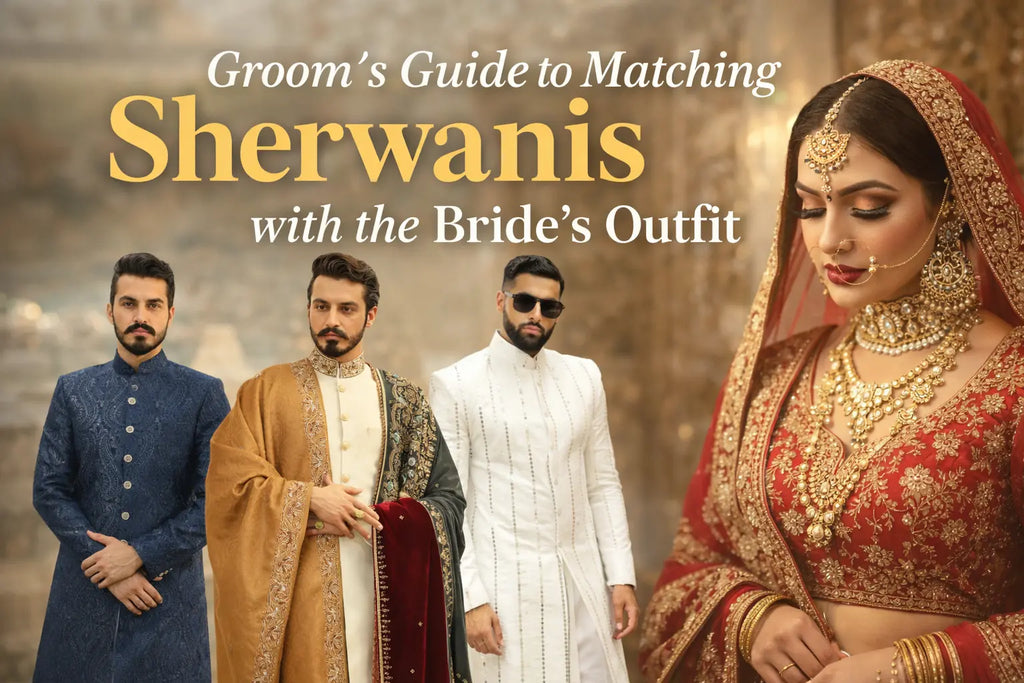
Planning a wedding is exciting, but coordinating outfits can quickly become overwhelming especially when all eyes are on the bride and groom. The secret to a stunning couple look lies in harmony, not exact matching, and that’s where many grooms go wrong. Imagine walking into your wedding venue with a perfectly coordinated sherwani that complements your bride’s attire effortlessly it creates a powerful visual impact. This guide will help you master the art of pairing sherwanis with your bride’s outfit while staying stylish and confident. Keep reading to discover practical tips, expert insights, and trend-driven ideas to elevate your wedding look.
Before selecting your sherwani, it is essential to carefully analyze the bride’s outfit in detail. Pay attention to the color palette, embroidery style, fabric, and overall theme of her attire. Whether she is wearing a heavily embroidered lehenga or a minimalist pastel ensemble, your sherwani should complement rather than overpower her look. Coordination does not mean copying; instead, aim for visual balance and aesthetic harmony. This foundational step ensures both outfits look cohesive in wedding photos and real-life moments.
When choosing your sherwani, focus on aligning with key elements from the bride’s outfit. For example, if the bride is wearing intricate gold embroidery, you can incorporate subtle gold accents into your sherwani. Matching textures like silk, velvet, or brocade can also enhance the overall look. This approach ensures a refined and well-thought-out appearance. It also reflects attention to detail, which adds sophistication to your wedding style.
2. Color Coordination Without Overmatching

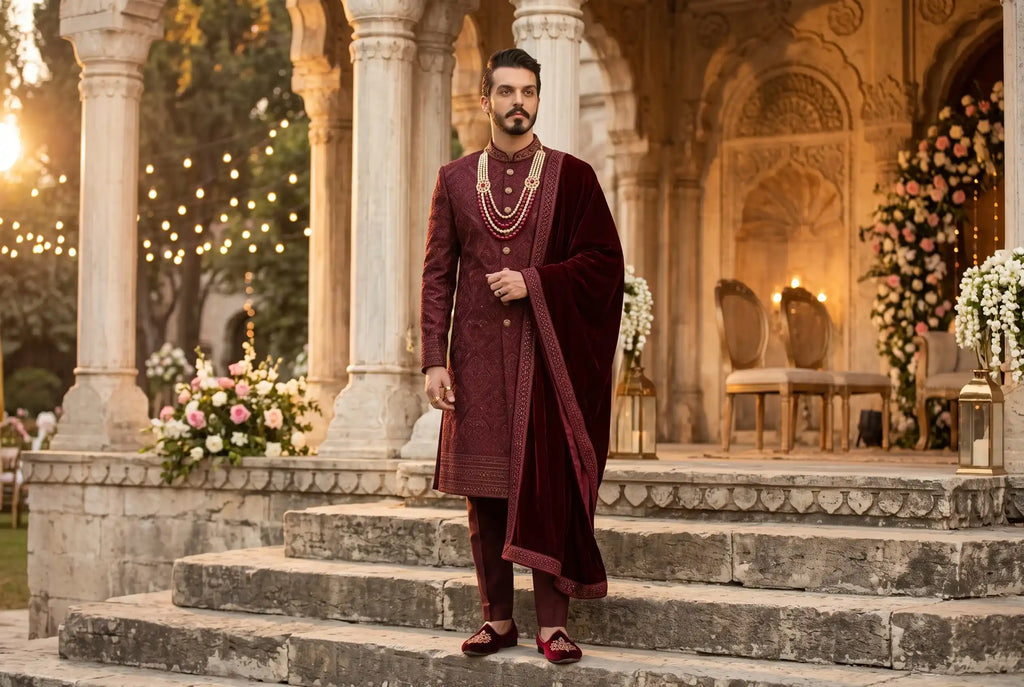
Color coordination is one of the most important aspects of matching outfits, but it should be done thoughtfully. Instead of wearing the exact same color as the bride, opt for complementary shades that enhance both looks. For instance, if the bride is in deep maroon, the groom can choose beige, ivory, or gold tones with maroon accents. This creates contrast while maintaining harmony. Such combinations are visually appealing and widely preferred in modern weddings.
Here are some popular color combinations for grooms:
- Ivory sherwani + Red bridal lehenga
- Beige sherwani + Maroon bridal outfit
- Pastel sherwani + Blush pink bridal dress
- Navy blue sherwani + Silver or grey bridal attire
These combinations help achieve a coordinated yet distinct look. Choosing the right color palette ensures your outfit stands out while still aligning with the bride’s attire.
3. Matching Embroidery and Design Elements
Embroidery plays a crucial role in defining the overall look of wedding outfits. If the bride’s dress features heavy zari or zardozi work, the groom’s sherwani should include similar elements in a balanced way. Avoid going too heavy if the bride’s outfit is already elaborate, as this can create visual clutter. Instead, aim for subtle detailing that complements her design. This ensures both outfits shine without competing with each other.
You can also match motifs or patterns to create a cohesive theme. For example, floral embroidery on the bride’s lehenga can be subtly echoed in the groom’s sherwani. Paying attention to these small details enhances the overall aesthetic. It also creates a polished and well-coordinated couple look. This strategy is especially effective for wedding photography and videography.
4. Fabric Selection for a Harmonious Look
The choice of fabric significantly impacts how well the outfits match. If the bride is wearing a rich velvet lehenga, pairing it with a lightweight cotton sherwani may look mismatched. Instead, choose fabrics that align in texture and formality. Silk, velvet, and brocade are popular choices for traditional weddings and offer a luxurious feel. Coordinating fabrics helps create a unified and elegant appearance.
Consider the season and wedding setting when selecting fabrics. For winter weddings, heavier materials like velvet work well, while lighter fabrics like linen or silk blends are ideal for summer ceremonies. This not only ensures comfort but also enhances the overall look. Matching fabric types subtly ties both outfits together. It creates a seamless visual flow that elevates your wedding style.
5. Accessories That Tie the Look Together

Accessories are the final touch that can make or break your outfit coordination. Items like turbans, stoles, and pocket squares can be matched with the bride’s dupatta or jewelry. Even small details like buttons or footwear can reflect the bride’s outfit color or design. These elements add depth and sophistication to your look. They also show a thoughtful approach to styling.
Here’s how you can coordinate accessories effectively:
| Accessory |
Matching Idea |
| Turban (Pagri) |
Match with bride’s dupatta color |
| Stole/Dupatta |
Complement bride’s embroidery |
| Mojari (Shoes) |
Coordinate with outfit tones |
| Brooch/Saafa Pin |
Reflect bride’s jewelry style |
These finishing touches enhance your overall appearance. They ensure your look feels complete and well-coordinated with the bride.
6. Balancing Tradition with Personal Style
While coordination is important, it’s equally essential to express your personal style. Your wedding outfit should reflect your personality while still aligning with the bride’s attire. Whether you prefer a classic royal look or a modern minimalist style, find ways to incorporate your preferences. This balance ensures you feel confident and comfortable on your big day. After all, confidence is the best accessory you can wear.
Do not hesitate to experiment with cuts, silhouettes, or unique design elements. For example, you can opt for an asymmetrical sherwani or a modern Indo-western fusion outfit. Just ensure it complements the bride’s look rather than clashing with it. Personalization adds uniqueness to your wedding attire. It also makes your overall appearance more memorable and authentic.
Final Thoughts
Matching your sherwani with the bride’s outfit is not about identical dressing it’s about creating a visually appealing and harmonious look. By focusing on color coordination, embroidery, fabric, and accessories, you can achieve a perfectly balanced style. Remember to consider the bride’s outfit as your starting point and build your look around it. Small details can make a big difference in creating a cohesive appearance. With the right approach, you can ensure both of you look stunning together.
This guide provides practical and stylish tips to help grooms make confident fashion choices. Whether you are planning a traditional wedding or a modern celebration, these insights will help you stand out. Use these ideas to create a coordinated and elegant wedding look. Make your big day even more special with a perfectly matched outfit.