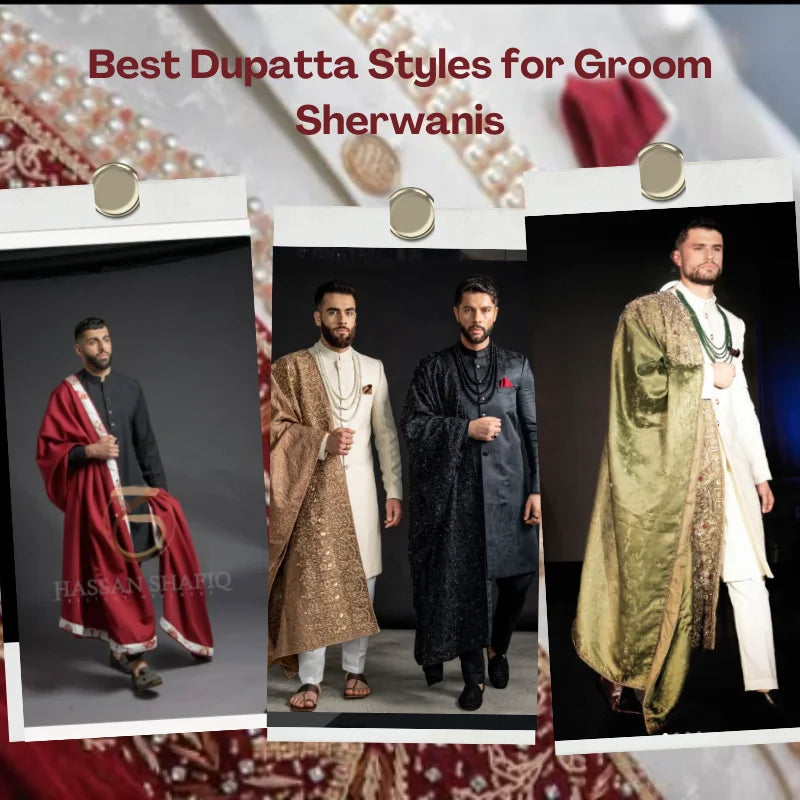
Best Dupatta Styles for Groom Sherwanis
Why Every Groom Should Wear a Dupatta With a Sherwani
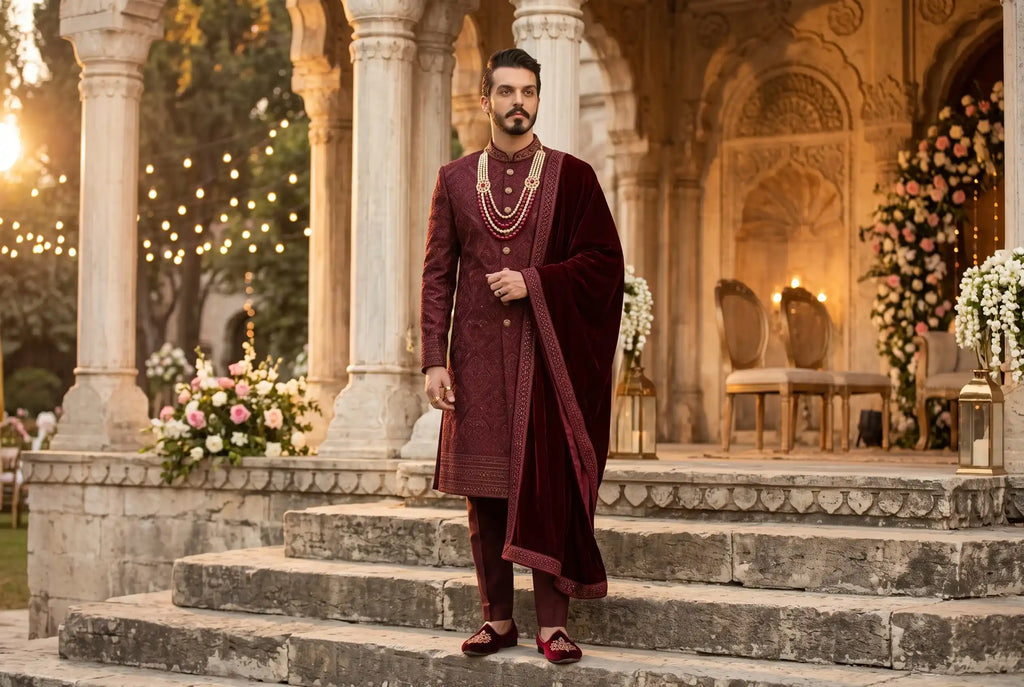
A groom’s sherwani looks powerful, but a dupatta makes it truly unforgettable. It adds grace, tradition, and royal charm in seconds. Wedding photos look richer and more balanced when a dupatta is styled well. It helps frame the outfit and draws attention to the groom. This is why dupattas remain essential in groom wedding fashion.
A dupatta also completes the cultural meaning of the outfit and represents honor, respect, and celebration in South Asian weddings. Without it, the sherwani can feel unfinished and less ceremonial. Beyond tradition, a dupatta allows personal styling through fabric, color, and draping style. It helps create a distinct identity from groomsmen while balancing heavy embroidery. A thoughtfully chosen dupatta improves posture, ensures comfort, and turns a good sherwani into a perfect groom look using the Best dupatta styles for groom sherwani.
Choosing the Right Dupatta for Your Sherwani

Choosing the right dupatta is never a random decision for a groom. It must match the sherwani in tone, fabric weight, and overall style. Fabric, color, and detailing should work together smoothly. A well-matched dupatta creates visual harmony and elegance. A poor match can ruin even the most expensive sherwani.
Always consider the wedding event before making your final choice. Baraat looks need heavier dupattas with rich textures and borders. Walima styles can be lghter, softer, and more modern. Venue lighting also affects how colors appear in photos and videos. Smart selection defines refined and confident groom styling.
Fabric Selection That Matches the Occasion
Fabric determines both comfort and fall. Velvet and jamawar look royal and grand. Silk and banarsi give a traditional touch. Tissue and chiffon feel modern and light. Each fabric creates a different groom personality.
Winter weddings allow rich fabrics. Summer weddings need breathable options. The fabric should not slip easily. It should hold shape while walking. This ensures confident movement during long ceremonies.
Color Coordination for a Balanced Look
Color choice impacts the entire groom outfit and sets the overall mood. Neutral dupattas work best with heavy and embroidered sherwanis. Gold and ivory remain timeless favorites for traditional weddings. Pastels suit daytime weddings and outdoor venues beautifully. Deep tones add drama and richness to evening events.
Avoid matching the dupatta exactly with the sherwani color. Slight contrast adds depth and highlights details better. Coordinate the dupatta with the turban or footwear instead. This creates visual interest without overpowering the outfit. It is a key rule of the Best dupatta styles for groom sherwani.
Embellishments, Borders, and Detailing
Borders define the dupatta’s character and overall style. Zari borders feel regal and timeless. Minimal embroidery looks refined and elegant. Heavy work suits only simple and plain sherwanis. Balance is always the most important factor.
Too much detailing can overpower the entire outfit. Clean borders photograph better in wedding lighting. Choose neat and fine craftsmanship. Let the sherwani remain visible and dominant. Good detailing enhances elegance naturally without looking excessive.
Classic and Modern Dupatta Draping Styles for Grooms

Draping style can completely transform a groom’s look. A single dupatta can create multiple styles depending on the fabric, event, and body type. Traditional drapes feel royal, formal, and suited for ceremonies like the baraat or nikah. Modern drapes are more relaxed, stylish, and perfect for receptions or walima. Choosing the right drape ensures comfort while highlighting your sherwani elegantly.
Body type and event play a key role in selecting a drape. Structured drapes with clean lines suit formal events and heavy sherwanis. Softer drapes and lighter fabrics work well for evening or casual receptions. Comfort should never be compromised for style. The Best dupatta styles for groom sherwani balance elegance, movement, and visual appeal.
One-Side Shoulder Drape

This is one of the most timeless and regal draping styles. The dupatta rests neatly on one shoulder, flowing along the side, instantly adding a royal touch. It draws attention to detailed embroidery on the sherwani and highlights the groom’s posture. This style suits all body types and works exceptionally well with long sherwanis or heavy fabrics. It is perfect for traditional ceremonies and formal wedding functions.
To secure the dupatta, use a brooch or pin discreetly on the shoulder. Keep the fabric fall straight, avoiding excess folds that may look messy. Pair this style with minimal accessories to let the sherwani stand out. It also works beautifully with heavy zari or embellished borders. This drape is ideal for grooms who want a classic, elegant look.
Across-the-Chest Drape
The across-the-chest drape is bold, majestic, and inspired by Mughal royalty. The dupatta crosses diagonally from one shoulder to the opposite side of the chest, creating a structured, commanding look. It adds visual strength to the groom’s silhouette, making it perfect for broad-shouldered grooms. This style is ideal for baraat processions and grand wedding entrances.
Medium-weight fabrics work best to maintain structure without slipping. Secure the shoulder with a hidden pin or brooch to keep the drape in place throughout the day. Avoid pairing with heavy necklaces that may clash with the fold. Keep the rest of the accessories minimal to maintain focus on the drape. This style adds confidence and regal presence to the overall look.
U-Shape Front Drape
The U-shape drape is symmetrical, clean, and modern. The dupatta forms a soft U in front, creating a refined frame around the sherwani. It is elegant, understated, and works well with lighter fabrics like chiffon, georgette, or tissue. This draping style is perfect for receptions, walima, or daytime ceremonies. It gives the groom a polished, balanced appearance without overwhelming the outfit.
The drape allows easy movement and prevents fabric from blocking embroidery. Ensure borders are visible from the front for maximum effect. Minimal accessories pair best to maintain a streamlined look. This style is especially suitable for contemporary grooms who prefer subtlety with sophistication. It works beautifully for both short and tall grooms.
Side Swag Drape
The side swag drape feels trendy, youthful, and dynamic. The dupatta hangs loosely on one side, creating flowing layers that move naturally with the body. This draping style is perfect for fusion sherwanis, modern wedding themes, or casual receptions. It adds flair and personality to the outfit.
Use lighter fabrics for better flow and movement, avoiding heavy borders or embellishments. The swag should fall naturally, giving a relaxed yet stylish vibe. Pair this with modern footwear and a minimal turban for a contemporary appearance. This drape suits grooms who want a playful, fashion-forward style. Evening events or outdoor wedding shoots are ideal for this look.
Front Loop Drape
The front loop drape is formal, structured, and highly polished. The dupatta loops around the front of the sherwani, creating clean, defined lines. Tall grooms carry this style exceptionally well, as it enhances vertical lines and elongates the silhouette. It pairs beautifully with straight-cut or fitted sherwanis. Perfect for grand wedding venues, it balances elegance with sophistication.
Use firm fabrics such as silk or brocade to maintain the loop’s shape. Secure both ends with hidden pins for stability. Keep accessories minimal, allowing the drape to take center stage. This drape complements elaborate embroidery on the sherwani collar or chest. It is ideal for formal wedding events where a refined appearance is required.
Half Drape Style
The half drape is minimal, comfortable, and modern. The dupatta covers only part of one shoulder, offering ease of movement while maintaining style. It works especially well in warm weather or for daytime ceremonies. This style allows the sherwani design to remain visible and keeps the overall look light. Contemporary grooms prefer this drape for its effortless elegance.
Pair it with subtle embroidery or plain borders for a sleek appearance. Soft, pastel colors enhance the modern vibe. Avoid heavy embellishments that can disrupt balance. Keep the turban or other accessories coordinated without overpowering the drape. This style is perfect for grooms seeking understated charm.
Over-the-Arm Drape
The over-the-arm drape is casual, confident, and versatile. The dupatta rests elegantly over one arm while flowing along the side. It allows free movement and is particularly popular for photo sessions and casual wedding functions. This style adds personality and relaxed sophistication to the groom’s overall look.
Use light fabrics like chiffon, tissue, or soft silk for maximum comfort. Avoid heavy embellishments that can weigh the drape down. Pair with minimal accessories to maintain focus on the sherwani. This drape works well for reception events, evening gatherings, and casual outdoor ceremonies. It is ideal for grooms who prefer a modern yet effortless style. Keep the look simple. It shows modern groom confidence.
Royal Groom Styling Tips for Dupatta Draping

Proper styling is the key to keeping the dupatta in place throughout the wedding day. A neatly draped dupatta enhances comfort and prevents constant adjustments. Small details like pin placement and fabric fall make a huge difference in the overall appearance. Secure draping avoids distractions during important moments and photos. Confidence comes naturally when the groom feels his outfit is perfectly styled.
Accessories can elevate the drape while providing practical support. Brooches, decorative pins, and chains can secure the dupatta without damaging the fabric. Balance is essential; one should avoid heavy layering that makes the look bulky. Comfort should always take priority over style for long events. Following these tips ensures the groom maintains a royal and polished appearance in the Best dupatta styles for groom sherwani.
Styling Essentials:
-
Use brooches or decorative pins instead of regular safety pins
-
Coordinate the dupatta color with the turban or shoes
-
Test the drape before the event for movement and comfort
-
Keep embroidery and borders visible for a regal effect
-
Maintain symmetry and neat folds to enhance photos
Traditional vs Modern Dupatta Styles for Groom Sherwanis

Traditional dupatta drapes reflect South Asian heritage and culture. They often feel heavy, regal, and ceremonial. Modern styles prioritize comfort, simplicity, and mobility without compromising style. Both approaches have value depending on the groom’s personality and the wedding theme. Choosing between them or combining them ensures a unique, elegant look.
Traditional drapes are ideal for baraat, nikah, or formal ceremonies. Modern styles work perfectly for walima, receptions, or daytime events. Fusion drapes are trending, blending traditional elegance with contemporary ease. Mixing styles gives the groom a distinctive presence. This balance creates a memorable and stylish wedding appearance that suits both cultural and modern sensibilities.
Groom vs Groomsmen Dupatta Styling Rules
The groom should stand out clearly from the rest of the wedding party. His dupatta must look richer in fabric and embroidery. Color choices should be bold yet tasteful to create a distinct visual hierarchy. Design details should feel exclusive to the groom only. These elements ensure he remains the focus of all photographs and attention.
Groomsmen should maintain a simpler approach to styling. Light fabrics and minimal borders help create cohesion without overshadowing the groom. Coordination with the groom’s colors is important, but they should avoid exact matches. Accessories and pins should be subtle. This ensures the groom’s dupatta remains the centerpiece of the wedding attire.
Common Dupatta Styling Mistakes Grooms Should Avoid
Many grooms make the mistake of over-styling their look. Combining a heavy dupatta with a heavily embroidered sherwani can feel overwhelming. Poor draping or slipping fabric ruins the visual balance of the outfit. Wrong length, width, or poorly positioned folds can make the groom appear sloppy. Ignoring comfort leads to unnecessary stress during long ceremonies.
Always try the full outfit well in advance. Avoid slippery or thin fabrics that do not hold the drape. Ensure the sherwani embroidery remains visible and is not hidden by folds. Limit accessories to maintain focus on the outfit’s key elements. Planning and rehearsal prevent these common mistakes and ensure a polished look.
Final Groom Dupatta Draping Checklist
Final checks are essential for stress-free wedding preparation. Ensure the fabric matches the season, with breathable materials for summer and heavier fabrics for winter. Confirm that the drape is secure and will not slip during movement or dancing. Walk around in the full outfit to check comfort and flexibility. Review overall balance, symmetry, and visibility of embroidery for a camera-ready look.
Quick Checklist:
-
Proper length and width for your body type
-
Secure pins or brooches to maintain drape stability
-
Clean, straight fall and neatly folded edges
-
Balanced accessories that complement the sherwani
-
Check coordination with turban, footwear, and other wedding accessories
Where to Find the Perfect Sherwani and Dupatta Combo
Choosing the right store or brand makes a huge difference in achieving the perfect look. Quality tailoring ensures that the sherwani fits perfectly and the dupatta drapes effortlessly. Expert guidance from stylists prevents common mistakes and enhances the overall style. Custom fittings provide confidence that every piece sits perfectly. Professional styling ensures the groom’s appearance remains polished, comfortable, and camera-ready.
Hassan Shafiq Menswear is known for premium groom sherwanis and high-quality dupattas. Their collections blend traditional craftsmanship with modern trends for versatile styling options. Experienced stylists guide grooms through fabric selection, color coordination, and draping techniques. Fabrics are carefully sourced for comfort, shine, and durability. This makes it the trusted destination for grooms seeking the Best dupatta styles for groom sherwani for a memorable wedding look.
Conclusion
A groom’s sherwani is incomplete without the right dupatta. From traditional regal drapes to modern, relaxed styles, the Best dupatta styles for groom sherwani can transform your wedding look. Choosing the right fabric, color, and draping technique ensures elegance, comfort, and confidence. Proper styling, attention to detail, and coordination with accessories make the groom stand out in every photograph. By following these tips, you can achieve a royal, stylish, and memorable appearance on your big day.
FAQs
Q1: What is the best dupatta fabric for a groom sherwani?
A: Fabrics like velvet, silk, jamawar, chiffon, and tissue are ideal depending on the wedding season and style. Velvet and jamawar give a royal look, while chiffon and tissue are lightweight and modern.
Q2: How do I choose the right color for my dupatta?
A: The dupatta color should complement the sherwani, turban, or footwear. Slight contrast enhances elegance, while matching too closely can look monotonous. Gold, ivory, pastels, and deep tones are popular choices.
Q3: Which draping style is suitable for a baraat?
A: Structured drapes like the one-side shoulder drape or across-the-chest drape are perfect for baraat events. They look regal, support heavy fabrics, and maintain elegance throughout long ceremonies.
Q4: How can I make my dupatta stand out from the groomsmen’s?
A: Choose richer fabrics, bold colors, and exclusive embroidery for the groom. Groomsmen can wear simpler, lighter dupattas with minimal detailing to maintain focus on the groom.
Q5: Can I mix traditional and modern dupatta styles?
A: Yes! Fusion draping styles combine the elegance of traditional drapes with the ease of modern designs. This creates a unique, stylish, and memorable groom look suitable for multiple wedding events.
Related post
27
Aug